How Can You Tell if Paint Is Bad
The other twenty-four hours, I had a conversation with a friend near the paint on an Acura Integra Blazon R he's currently restoring. We were discussing how much life could be brought dorsum to the car with a pigment correction. Based on the pigment's wearisome and faded appearance, my first instinct was that it was single stage and didn't take a clear coat. He mentioned that he witnessed clear chunks of paint fly off the bumper while pressure level washing it (the car really needs a complete, proper pigment chore) which led him to believe it had base/clear paint.
Despite the rather caveman-esque proof that at that place was a articulate coat on the automobile, I maintained that most of information technology was nevertheless the original single stage. Why was that? Because he had likewise performed an like shooting fish in a barrel, withal effective exam without even knowing information technology. He had tried using a cleaner wax on the balance of the car and noticed the towel turning the colour of the paint. This is primal evidence that you're dealing with single stage pigment.
Later on that night he went dwelling house to google information technology and establish out that Pheonix Xanthous Integra Type Rs were indeed sprayed with single stage paint. The bumper with the clear glaze flaking off was likely repainted by a low-finish torso store at some betoken.
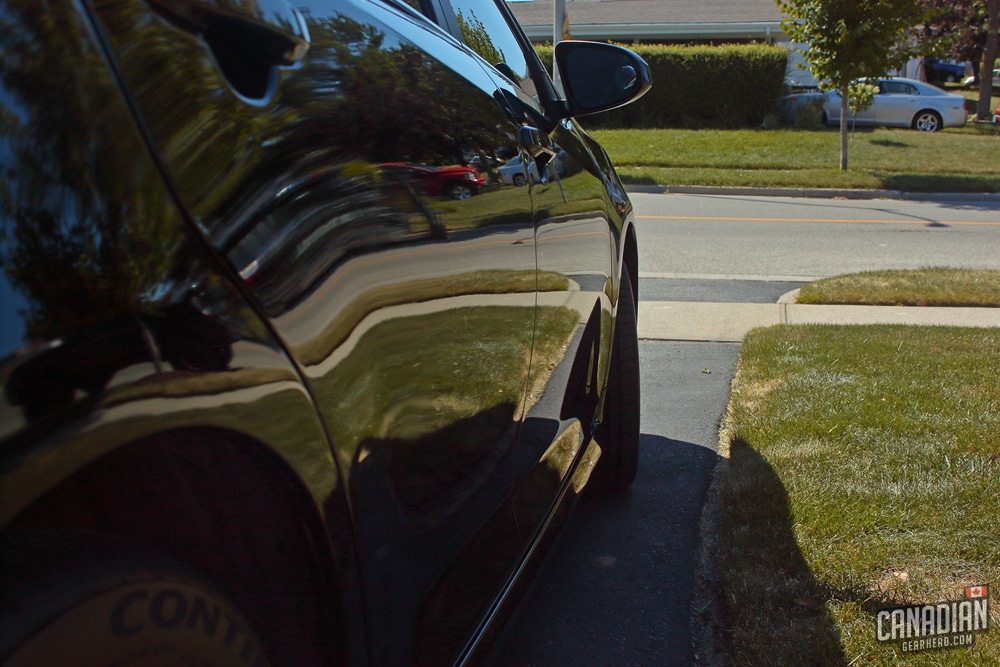
At present, it's worth noting that I'chiliad non coming at this post from an machine body background. This is purely from a detailer's perspective. I've done paint corrections on many cars over the years (about of them clear coated), simply my own personal Toyota MR2 all the same wears its original single stage pigment. This article is intended to share how I place, piece of work on, and protect these 2 different types of paint systems.
What is single stage pigment?
In short, single phase paint is like any other paint chore – but without a clear coat on tiptop. Clear coated vehicles may exist referred to as "Two Phase" because they have a divide base coat (color) with a articulate coat on height.
Single stage paint is nigh usually found on older vehicles, although certain colors offered by sure automakers are still single stage to this day. For example, white Toyota trucks oft nonetheless use unmarried stage pigment.
Possible reasons for them to employ single stage on their white trucks:
- White is the color that shows any oxidation the least
- Many trucks ordered in white are purchased equally work trucks and will likely exist covered in graphics or even repainted to friction match the visitor's branding. Single stage pigment could be used to salvage money
I can't say for sure why some companies however use unmarried stage pigment on their modern vehicles, but these reasons make sense to me.
Unmarried stage paints were very common on Japanese cars in the 80s and 90s. Non-metallic colors like white, black, red and yellow were ofttimes unmarried stage. These pigment jobs besides tended to be softer and easier to scratch than today's vehicles that wear harder articulate coats. This is of course just a generalization and there are many exceptions. Some unmarried stage paints are difficult, and some brand new vehicles have soft clear coats. But that's a topic for another solar day.
Clear coat vs. no articulate coat
Most of the differences betwixt single phase paint and base/clear are related to the painting process. And since I'chiliad not an auto body guy, I'm not going to pretend to be an expert on that.
But once the pigment has been applied to a vehicle, there are really only two differences that volition affect the average auto owner:
one) Single phase pigment is more likely to become oxidized if it sits out in the dominicus unprotected for a long period of fourth dimension. Oxidized unmarried stage paint has a very dull, chalky await and experience. Usually, when yous encounter a pink vehicle that used to exist cherry-red, you lot've found a instance of unprotected unmarried stage paint.

Clear glaze tin also oxidize, information technology only isn't most every bit noticeable to your eye. Why is that? Because the pinnacle glaze is intended to be clear. So when information technology gets dull, white, and hazy, the contrast of how it looks and how it should look isn't that big of a difference. On the other hand, the top layer of yellow single stage paint is simply that – yellow. So when it gets deadening, white, and hazy, it'south a very noticeable difference.
ii) Single stage paint bleeds color on buffing pads and towels (or anything used as an abrasive). You volition know immediately whether yous're dealing with single stage paint or not as soon as you brainstorm polishing it. At that point at that place's no more guessing – information technology'll tell you lot every single time!
Is information technology safe to polish unmarried stage paint?
This is a common misconception about unmarried phase paint. Although information technology may be scary at first, information technology is 100% safety to wet sand, compound, and polish (provided there's plenty of it still on the vehicle!) The thing is, it can really surprise someone if they're unfamiliar with information technology, or not expecting to encounter it. I can sympathise why it would shock them…
Because the biggest warning sign that yous've burned through the clear coat is exactly the aforementioned every bit a regular mean solar day when polishing single stage. The color shows up on your buffing pad and towels. If this happens when you're polishing a base/clear paint job, information technology's catastrophic. It ways you've gone manner, way too far – you've removed all the clear glaze and have now touched the base (color) coat.
Y'all might want to bring some java or donuts to your local body store considering they'll be the ones fixing your screwup!
It's perfectly normal for the colour to bleed onto your polishing pad when you're working on unmarried phase paint. There'south no doubt that it's alarming if y'all're non used to it though. In the case of my red MR2, my garage looks like a bloody crime scene when I polish it!
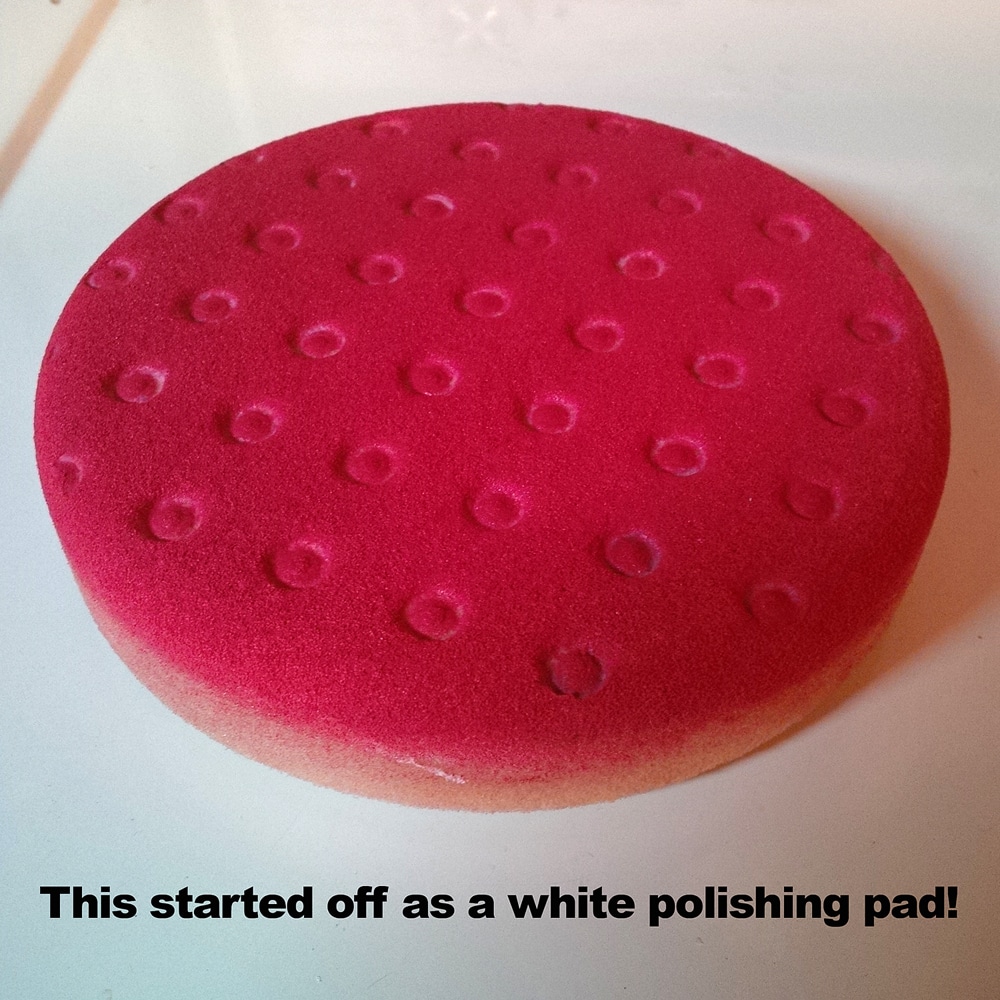
I think people'southward biggest fright when polishing single stage pigment comes from the fact that they can see the paint they're removing. This doesn't happen when doing a base/clear paint correction. The paint you're removing is clear, and a lot of the time the product you're using to compound or smooth is white as well. Then if y'all're using a white polish, on a white polishing pad, you probable won't observe all of the paint residue and spent product loading up on your pad.
Merely brand no mistake – information technology's in that location. You will remove the verbal aforementioned amount of pigment when polishing a articulate coat as you volition with unmarried stage. You just don't see it. People with paint correction feel volition exist able to tell when a pad becomes loaded or muddied by other factors, such equally the way the paint is cutting, or the amount of grit coming from the pad. The untrained center, notwithstanding, will think no pigment has been removed.
I recollect a sure level of healthy fear is needed when doing a paint correction. Once you've polished unmarried stage pigment and realize just how much paint is removed in the procedure, yous'll have a new-found respect for the job. Being overly confident when polishing your car is the fast lane to some serious trouble. What you can't see WILL hurt you!
Are all new cars articulate coated?
Equally mentioned to a higher place, not all new vehicles have clear coats. Almost of them exercise though. Information technology'due south becoming more than and more rare, but occasionally you'll find a white or blackness vehicle that has single stage paint.
There is a disruptive 3rd type of paint out in that location that some modern automakers are using: tinted articulate glaze. This isn't all that common and is usually only plant on some of the more "specialty" paint colors. Lexus and Ford are just ii of the manufacturers that have been known to use tinted clear coats. They apply this to really fine-tune the depth of a color or to provide somewhat of a candy advent.
When polishing, tinted clear coat can be easily mistaken as single stage pigment. It'll evidence up on your buffing pad just the same. I've already told you that there'due south nothing to fright when polishing single phase paint. Nevertheless, there is cause for concern when working on a tinted clear coat.
Tinted clear coat is much more dangerous to polish than single phase or regular articulate glaze. The reason is that the tinted articulate plays a large office in the actual colour of the auto. For instance, permit'southward use a candy red painted vehicle as an example. This color is absolutely gorgeous. It's deep, glossy and even has a nice metallic flake in it. You need to be very careful when polishing it though.
Because the clear coat is "tinting" the shade of crimson, removing too much of it will actually change the color of the auto. This is bad if you're doing a consequent laissez passer across the whole machine. This is horrible if you lot're only trying to buff out a scratch in a specific surface area. You run the loftier run a risk of leaving a patch of paint with a completely dissimilar shade of cherry. So if you're polishing a tinted clear coat, use circumspection!
How to find out if y'all accept single phase paint or base/clear
Luckily, there are a few easy ways to figure out whether you take unmarried stage paint or non. The first way is to merely eyeball it. If your cherry machine looks pink, that'southward a pretty good sign that it's single phase.
Some other way to tell if you accept single stage pigment is to google your specific car and color. Information technology's quite possible that y'all'll notice a forum post or some kind of information online telling you if it has a clear coat or not. Professional detailers love to share their work online and sometimes they'll tell the story that goes along with the chore. Doing a quick search should reveal this data if it'southward a common vehicle.
The downside to trusting the cyberspace is that even though information technology might tell you the manufacturer used single phase, your car might not be wearing its original paint. It'southward always possible that a vehicle has been in an unreported accident that you didn't know virtually. This could mean 1 or two panels have been resprayed, or information technology could mean the unabridged auto now has a modern base/articulate paint chore in the original colour.
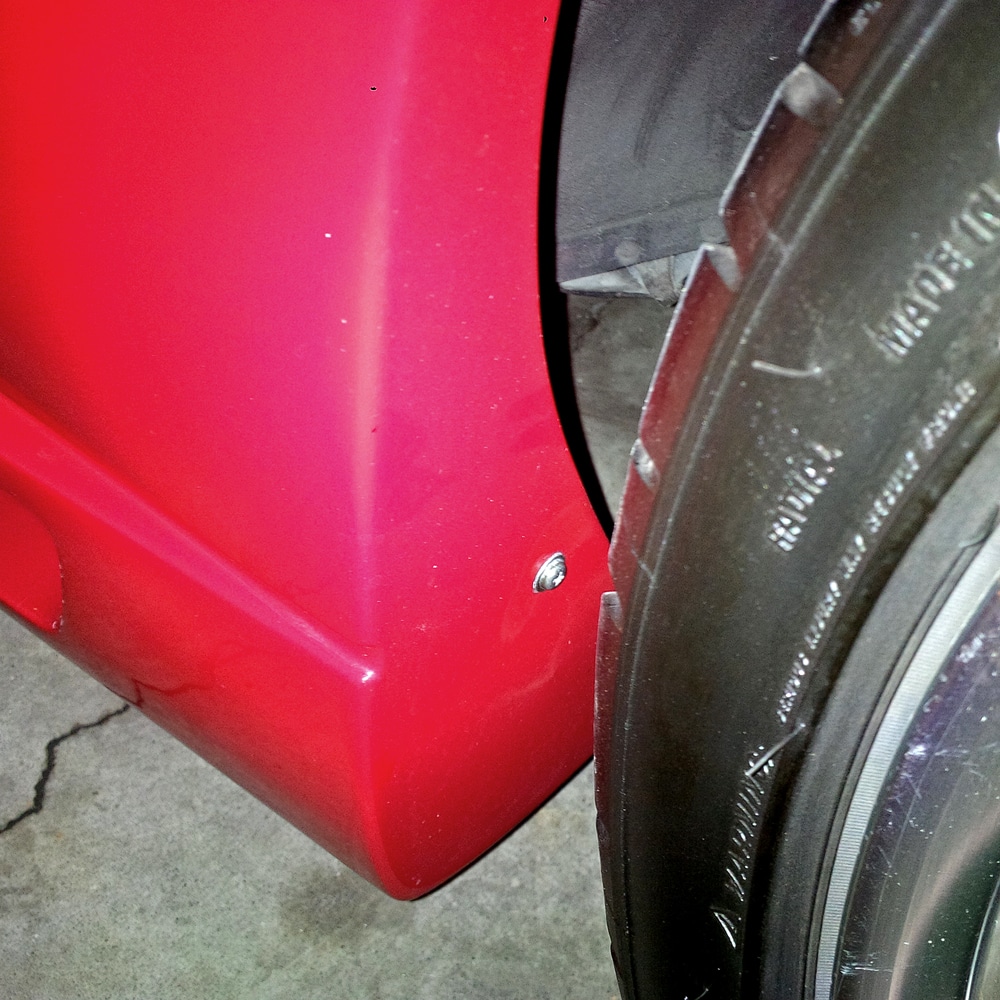
With that in mind, the accented all-time way to tell if your automobile has a clear coat is to physically test it yourself. You tin use any type of abrasive compound or smoothen on a towel and rub the pigment with it. A mild cleaner wax like this 1 will do the trick likewise.
Choose an inconspicuous area to test like a door jam, within a wheel well or the lower function of a bumper. Apply one of these products by hand and run across if the towel stays clear or turns the color of the car. If information technology remains articulate, y'all have a clear coat. If it changes colour, you have unmarried stage paint.
How to care for unmarried phase pigment
Caring for paint without a articulate coat isn't much different than whatever other paint task. You tin feel costless to utilize your favorite waxes or sealants on information technology. They'll apply the same manner and perform the same way.
I spoke with a sales rep from my favorite ceramic coating visitor, Gtechniq about using their coating on my MR2. He told me that information technology's perfectly fine to employ the ceramic coating on unmarried stage paint. The just drawback is that buffing off the backlog or removing high spots can be a fleck more tricky than it is when dealing with a clear coat.
In my stance, it'due south always important to protect your vehicle's paint. Only information technology's even more important to protect unmarried phase paint because of the risk of oxidation we talked about earlier. Retrieve, unprotected paint + sitting in the sun = oxidized paint. If your prized possession wears single stage pigment, keeping it in a garage and using at least a high-quality paint sealant would be a practiced thought.
So is non having a clear coat on your vehicle a bad thing?
In the end, it's non as big of a deal every bit people go far out to be. I've read comments online from owners of sure vehicles that are horrified to find out their love car has single stage paint. It's not necessarily a bad thing. Information technology doesn't mean that it'll exist easier to scratch. It doesn't mean that it'll be less shiny. It's just a dissimilar type of pigment, from a dissimilar era. I personally enjoy working with single phase pigment because the before/after results can exist really incredible.
I'll leave you with i terminal piece of advice: if you're going to exist polishing your single stage paint, wear sometime dress!
If you institute this article helpful, let me know! Follow me on Facebook, Instagram, Twitter, or leave a comment below.
kollmansqualleave.blogspot.com
Source: https://canadiangearhead.com/how-to-tell-if-your-car-has-single-stage-paint/
0 Response to "How Can You Tell if Paint Is Bad"
Post a Comment